A chance to view life Through the Eyes of Strays

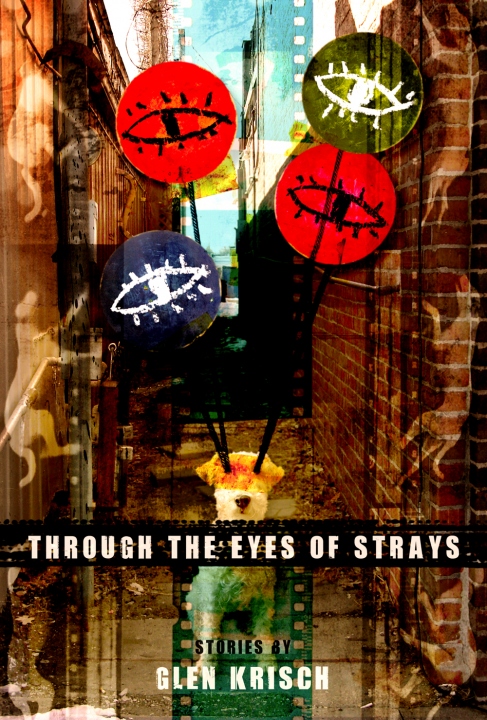
Released into the big bad world yesterday, Through the Eyes of Strays is a collection of Glen Krish’s best short stories from the past twenty years. Full of speculative, gut-grabbing, mind-expanding tales, this is a collection you will not want to put down – I’m certain there is something for everyone in this!

The collection is described as:

Misanthropes and misfits.

Society’s loners observing, and in some cases, changing the status quo.

An agoraphobic woman is forced to face a ruined world after months of isolation.

A father faces the death of a child in a world where genetic perfection has done away with such traumas.

A lovelorn man searches for the perfect woman and, ultimately, finds himself.

A nameless drifter absorbs people’s pain, the filth rotting their souls, until one day he can no longer bear this burden alone.

In these and many more stories, Glen Krisch crosses genres, disrupts and disfigures them, until something entirely its own rises from this alchemical brew.

Published by Dog Horn Publishing, it was a fantastic project to work with and edit, Glen has introduced me to characters and hidden stories that cannot be found elsewhere.

You can purchase the trade-size print edition from Lulu. If you’d like to find out more about Glen’s work, check out his website and blog.

Do you Flash?

So today is officially National Flash Fiction Day. I would hope/think that most of you have heard of Flash Fiction; it’s a growing form which is now taking place in prizes and competitions across the country as well as in literary collections and magazines – in the online and offline world it is finding it’s feet. The official day was created by Callum Kerr, who immersed himself in this new form, creating a micro-story every day for a whole year – his talents are found at flash365.blogspot.com.

There seems to be a lot of debate about the form’s literary and/or artistic merit (when is there not some form of debate in the world of literature) however I think that not only is an artistic pursuit and can become beautiful literary (and genre) creations, it can also be the best form to use to hone your skills; ensuring that every word on the page (or paragraph) counts.

If you want to try your hand at Flash Fiction, remember, I’ll be running a short (well it would have to be…) course on Flash at Swanwick Writer’s Summer School in August this year – one of many courses and workshops to be explored during the writing-packed week: think about the number of skills you’ll walk away with in 6 days!

Want to know more?
Take a dip into the world of Flash on the NFFD website. There was a fantastic article in The Guardian on Monday by David Gaffney, and look out for more stories published today – favourites that were posted on the article. Also if you’re tweeting or facebooking, get involved with the fun and games there too.

The Tour of The Coward’s Tale

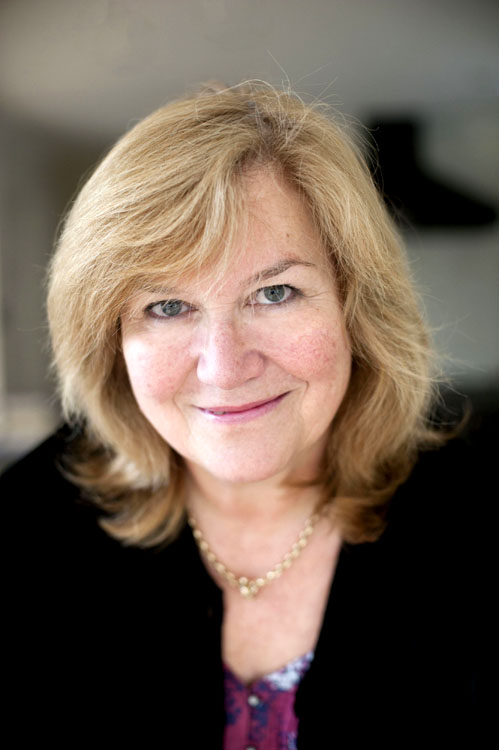
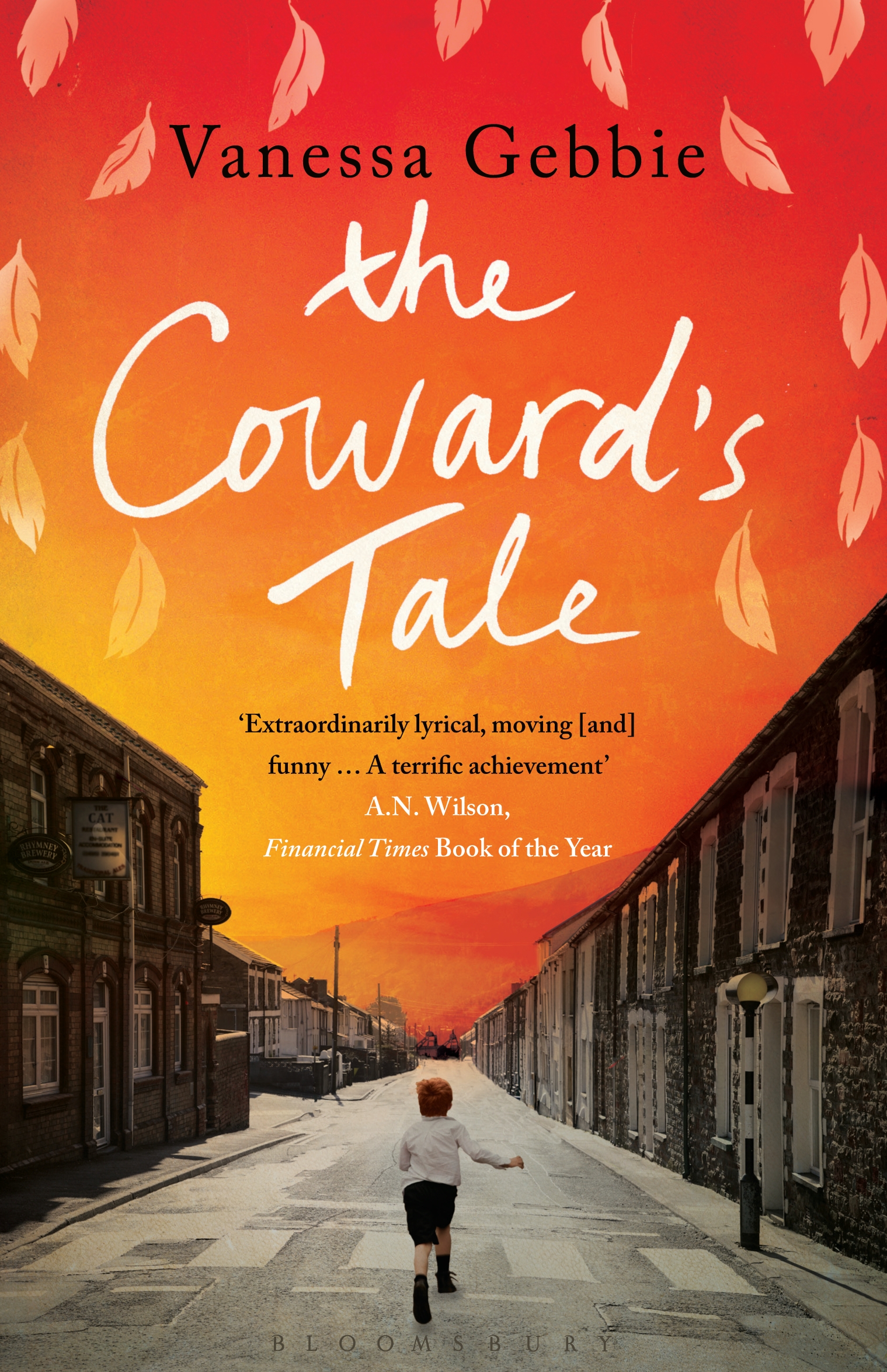
This month has been an exciting one, and today I am honoured to talk with Vanessa Gebbie about her début novel The Coward’s Tale. This inspirational novel was launched in paperback yesterday, as well as being available in hardback and e-book.

Alexa Radcliffe-Hart: Hi Vanessa, thank you for joining us and agreeing to answer my questions as well as those sent in.

Vanessa Gebbie: Hi Lexi, and thanks you so much for asking me. It is great to be here.

ARH: Firstly, I’d love to tell you how much I enjoyed The Coward’s Tale. I found myself lost in the interwoven stories and unwilling for the connections to end!

VG: That’s really lovely feedback… thank you!

ARH: There are so many questions I could ask, but I wouldn’t want to spoil the beautiful unfolding of the novel for those who haven’t read it yet. Within The Coward’s Tale, the storytelling meta-narrative gains importance throughout the novel; did you originally set out to provide this additional layer to the novel, or was it a natural development?

VG: No, I didn’t ‘set out’ to do anything. The novel began as a simple series of stories exploring the reasons why so many in the town were strange in some way,  even though in other ways they are perfectly usual members of a small community – the window cleaner, the bank clerk, deputy bank manager, the teacher, the librarian, the undertaker, out of work miner, and so on.
As I wrote more and more, enjoying them hugely, some (the gas-meter emptier’s tale, for example, had me laughing out loud on occasion, much to the consternation of my family) each backstory seemed to go back to the same incident – the collapse of Kindly Light Pit.  It wasn’t until I began to concentrate on the overarching narrative, that of Laddy and Ianto, that Ianto’s own story had to come out. I think I had been avoiding meeting that one head on – it was hard to acknowledge – I love Ianto, as I love all the characters.
His story is the real catalyst – he has been the repository of the town’s history and has been sharing stories with whoever will listen. And it really isn’t until his own story is added to the mix that the whole series takes on a completely different resonance. He is ‘released’ in some measure, freed, after sharing his story. Just as the author was freed and was able to finish the novel. (!)

ARH: The gas-meter emptier’s story had me laughing out loud too, which proved an important balance for some of the more heart-rending tales.
Laddy is spellbound by the stories that are woven by Ianto, yet questions their truth because of the “stories” told to him by his parents. This transformation in innocence is a role reversal of the adult characters that search for the innocence they’ve lost. Do you believe that there is always innocence within storytelling?

VG: I wonder if there has to be a certain innocence – in that as soon as a writer exhibits a judgement one way or the other, the story is weighed down with a ‘message’? But I think I mean innocence as in ‘emotional honesty’  – otherwise a story does not work as well as it might.
But maybe more importantly, doesn’t the writer need an eye that sees things afresh, and the ability to use those impressions well so that the prose is fresh, not predictable?
Being able to see things in a new way – that is a childlike quality, akin to innocence – I don’t mean that the writing is childlike, but the ability to stand outside the normal responses, and rethink, re-experience, as if for the first time? 

ARH: I think that is where the strength of Laddy’s characterisation is, the way in which he provides the viewpoint with emotional honesty, which allows other characters to “re-experience” as well as the reader.
The use of the lilting Welsh accent within the narration as well as the character dialogue immerses the reader throughout the multiple characters, as well as providing fluidity between overall story and the individual stories. Was it straightforward to write with accent/dialect and did you find any difficulties in the process?

VG: To begin with, when the process first started, I was unaware. The first section I wrote (now The Clerk’s Tale) was fine, it was set in the south Wales I remembered from childhood, and the rhythms and sounds came back easily. It won a nice prize at Bridport. But as soon as I became conscious of it, and tired to reproduce the lilts, I went too far.
Luckily, I had an important bit of feedback on a subsequent section from the novelist Catherine Merriman, who said the voice was ‘like Yoda’ in places. I had no idea who or what Yoda was. When I discovered, I was horrified! But that was diamond feedback, and it led to me making every effort to return to my original voice.

ARH: There is such a fine line with many accents aren’t there? But the Yoda advice is perfect!
The Clerk’s Tale is not the only experience you have in writing award winning short stories, and The Coward’s Tale felt like an exploration between the short story and novel forms, especially with interwoven tales of so many characters which ultimately tells the tale of the coward. Was the novel evolved from one short story or many? At what stage did you know it was a novel you were writing?

VG: Honest answer? I was plagued with doubt the whole way, really. Not an easy ride, this one. I didn’t want to write a single narrative, and my agent (Euan Thorneycroft at A M Heath) encouraged me to write it as a novel, not a series of stories.  It started with The Clerk’s Tale, referred to above – I was signed by Euan on the strength of that story.
But whereas I knew what I was doing (more or less!) with the stories, the creation of and positioning of the overarching narrative and the interweaving that was necessary to create a different workable structure, was difficult – I needed help with that. Thanks to the Arts Council, to whom I shall be eternally grateful, I was able to have a period of mentoring from the terrific novelist Maggie Gee. I can’t sing her praises highly enough. I think we made a good team – very different writers – but something worked!

ARH: Thank you for your honesty. It’s brilliant to hear more on how creative mentoring can bring new light and understanding to writer’s work.
You provide the wonderful #storygym on Twitter to help writers all over the world be inspired with the writing prompts. Where do you find your own writing inspirations? Are there any particular writers you go back to again and again?

VG: I’m a very visual writer. I respond best to images, and to lines of poetry that are image-based, lyrical prose, lovely sounds too. I go back and back and back to the works of William Golding. But then I also love W G Sebald, and that’s hardly in the same ballpark! Female writers too – I’d pick Arundhati Roy, and a new writer, Suzanne Joinson, about to hit the shelves with a stunning novel called ‘A Lady Cyclist’s Guide to Kashgar’ (Blooomsbury, July). Her prose is really extraordinary and sets connections firing in this writer’s head.
I wake up every morning and tweet a #StoryGym prompt – it’s about the first thing I do after cleaning my teeth! Some of them are just nuts (not my teeth, the prompts…) – but it is lovely to hear from writers who are using them, and especially when a story has been published, or even won something. of course, that’s nothing to do with me, it is the skill of the writer – but it is a nice feeling to know that it started with a few words on Twitter.

ARH: Sometimes the most unusual of prompts can provide the best writing, huh!
Have you ever been inspired to write from the viewpoint of a character that you disliked? And if so, could you describe the writing process around this?

VG: Oh yes, of course. I can dislike things about someone, usually what they do – and still be intrigued by them, wonder why they are like that, how far they will go.  And more importantly, will they do something to redeem themselves. Example: I wrote a story (it’s in the collection, ‘Words from a Glass Bubble’) about a guy called Harry, in a story called Harry’s Catch. He’s done some fairly nasty things in his time – rape, for one. Now he’s old – the story explores his life, to the extent that I got quite fond of him in the end, even though he did something horrific almost at the end of the story…
Process-wise – I tend to focus on what the character does, rather than whether they can be judged as ‘loveable’ or not. People are never completely black and white, I guess. Human beings are complex animals, best to let them be that on paper too.

ARH: I agree, it’s that grey area within people and characters than can bring the most out on the page. The grey area questions continue…
How does an author create a sentence in which words resonate with a reader, to the extent that he or she describes a feeling exactly – not a physical sensation but a private thought and/or emotion, that when read, makes one realise that one is not alone in this world? This may be a subjective experience for each of us and is not replicated for all readers, or is it?

VG: A really interesting question – I’ll try to answer.
All a writer can do is observe life in all its facets, and use those observations in their work to build up an honest and emotionally true world which resonates so much with readers (hopefully…) that it becomes ‘real’ in their heads. That means honest observation of one’s own emotions and feelings too.
So, when a character is experiencing something, thinking something, feeling something, you to some extent ‘relive’ the experience yourself, with the character, as you are writing. If you are that bound up with your characters (as I tend to be) the feelings will be strong – and all you can do is put them into the most honest words you can.
I think originality also comes into it. We might read something described in terms we’ve seen many times, before, and whereas we will ‘understand’ the message, maybe we won’t ‘feel it’. Whereas, if the language used is different, drawing original parallels – no clichés in similes, for example – we look at the familiar through fresh eyes. That’s a powerful thing to learn to do.
The rest is up to the reader. It’s not possible for a writer to touch everyone, for the simple reason that we bring our own life experiences along with us when we do anything, especially when we read – the words written by the writer will either touch us, or not, depending on our own ‘baggage’.  But emotional honesty is an important tool, here – and an ability to express the subtlest of emotions.
Hope that helps! And I award a copy of ‘The Coward’s Tale’ to this questioner. 

ARH: Thank you for choosing the winning questioner! I would like to congratulate Sally Carlow on winning the paperback copy of The Coward’s Tale!
Continuing with the writing questions, what is the worst assumption any aspiring writer can make about their work?

VG: That it is any good at all. I think the best position to start from is that your work is awful. If you are right – then great – guess what, with a bit of hard work you can learn to write well. If you are wrong, you are probably a genius. And there aren’t many of those…
Wait until someone who knows what they are talking about tells you your work is OK. That does not mean your mates, your parents, your partner, or the person at the writing group with the loudest voice (who had a story published somewhere ten years ago) or the administrator of a vanity publishing organisation. You will know in your heart when feedback means something. And you will know in your heart when it doesn’t.

ARH: Good and constructive feedback is something every writer needs. Along with this, what is the most important book any aspiring writer should keep by their side?

VG: NOT a how-to book – not even mine! You need books that make you want to write as well as that writer did. For me, it’s anything by William Golding. Poetry – John Donne at the moment. And it’s also worth keeping a few books that remind you how terrible some people’s work is – go and download a few free self-published e-books at random.

ARH: Yes, having that scale is definitely helpful! Continuing towards publication, what is the worst mistake any aspiring writer could make when submitting a proposal?

VG: Telling an agent it’s their lucky day, and they are being given a one-off chance to represent the next big thing since J K Rowling. And copying the proposal to every agent in the book.

ARH: Thank you for your honest answers, I’m sure a lot of writers will find this advice invaluable. Looking to the future, how do you plan for your next project? Is it planned or do you go with what inspiration and imagination provides you?

VG: The next project is under way, if you really mean the next novel? The working title is ‘Kit’ – it’s come directly out of The Coward’s Tale, and revolves round the same two main characters, Ianto and Laddy. A prequel/sequel – perhaps. It’s a difficult thing – I know more about this one, and am thus less able to explore as I go. It’s a challenge, and I will complete it. Whether it will be any cop is another matter!
But my overriding feeling is this – I’m not young. I spent six years writing The Coward’s Tale, but it was never the only thing on the boil, and I won’t now make the mistake of focussing on one thing only – what if it’s not right, or isn’t wanted? Besides, I’m a Gemini – I need to be able to flit from one thing to another. So whilst ‘Kit’ is the big project, I’m also doing a lot of other things.
Viz:

  1. Working on a short story commission for BBC Radio, to go out during Brighton Festival.
  2. Revamping ‘Short Circuit, Guide to the Art of the Short Story’ for Salt Publishing’. Story, the art of story, is my first love. It’s a good book, used a lot on creative writing courses, and I want to make sure it stays up to date, doesn’t get tired like so many ‘how-to’ books do. ‘Short Circuit II’ will have additional chapters from stunning people like Scott Pack, Tom Vowler, Nicholas Royle, plus extended chapters by some of the contributors who had shorter pieces in the first edition. I chose well. Since writing their chapters for the first edition, many of the very successful, talented contributors have done even more amazing things in their careers – look! Graham Mort won the Edge Hill Prize. Carys Davies won the Olive Cook Award from The Society of Authors. Zoe King was elected Chair of the Society of Women Writers and Journalists. Alison MacLeod shortlisted for the National Short Story Award, and the BBC Short Story Prize.
  3. Continuing to learn about, write and publish poetry. Just finished a wonderful series of workshops led by poet Pascale Petit at Tate Modern.
  4. Acting as travel agent for a group of writers going on a tour of Arras and The Somme later in 2012, in the excellent company of military historian Jeremy Banning. That’s going to be a great trip – mirroring my own trip with him early in 2011, following The Swansea Pals to the Somme, Passchendaele and back to the Somme. Can you imagine what it must have been like for the lads who fought there in 1916, returning a couple of years later and finding they are fighting over the same ground where their friends died?
  5. Teaching – loads. Looking forward especially to a week-long short story workshop at the wonderful Anam Cara Writers and Artist’s Retreat, West Cork, Ireland – where I have been going to write my own stuff since 2005. I heard about the place via the Fish Publishing website – and took a chance and joined a creativity workshop – and have been going back at least twice a year ever since.
  6. Self-publishing a books of flash fictions with a friend, who is a terrific artist.

I think that’s probably enough!

ARH: Wow! That is a fantastic line-up of work; I personally can’t wait to see more of Ianto and Laddy’s tales!
Finally, I love your blog and website with its interactive design; particularly the musical map for The Cowards Tale where readers can find out excerpts about each of the characters. You also communicate with your readership through Twitter. How important do you feel interacting with fellow writers and your reading audience is in these ways?

VG: I’m glad you like the website – I love it too – it is the work of Roger Betts, a musician friend, although we’ve never met. It’s very creative – well, we’re meant to be creative beings – I despair when I see the same old same old on writers’ websites – c’mon, guys! Less meaningful mournful stares, huh?
Writing is a lonely occupation – interaction with other writers is great, and keeps me sane. And it is really lovely to be in touch with readers on Twitter, and on Facebook too. It’s very important for me! Keeps me grounded. There is not much point in writing if readers aren’t in the equation, after all.
Thanks Lexi – super questions, I have enjoyed tussling with this lot. Thank yofor having me, as we used to say after parties, when I was six!
Vanessa can be found at http://www.vanessagebbie.com, on her blog or on Twitter.
The tour has visited Claire King, Tania Hershman, and Sara Crowley so far, and with more to follow so please check out the full paperback party schedule here.

Fruit Bruise Press @ Alt.Fiction

For those of you following the news about Fruit Bruise Press since I first mentioned this new literary imprint for Dog Horn Publishing, this is a quick post to fill you in with some more information and remind you about Alt.Fiction which is coming up in two weeks time.

There is more information about Fruit Bruise Press on the Dog Horn Publishing website now, so please feel free to read more about what we’re looking for the in the way of submissions and what we hope to provide with the writing development and anthology project.

The first outing for Fruit Bruise Press will be at Alt.Fiction on Saturday 14th April. The workshop “Jumping boundaries and breaking rules” will be running from 4-5pm, serving as a taster for what is in store for the future. Based in Leceister over two days for this year, Alt.Fiction is now in it’s sixth year of brilliant events for readers and writers of science fiction, fantasy and horror. Although Fruit Bruise does not focus on genre specific fiction, we welcome one and all to our workshop to help you find new ways into your writing whatever your background! The team at Dog Horn Publishing will be on our stand over the weekend, so please feel free to drop by and have a chat with us about your work or the DHP books available!

If you’d like to find out more about Fruit Bruise Press, Alt.Fiction and what I’m planning for the workshop, take a look at the interview by Katie Shanks on Left Lion: the home of Nottingham Culture.

99 Reasons Why: an unseen ending

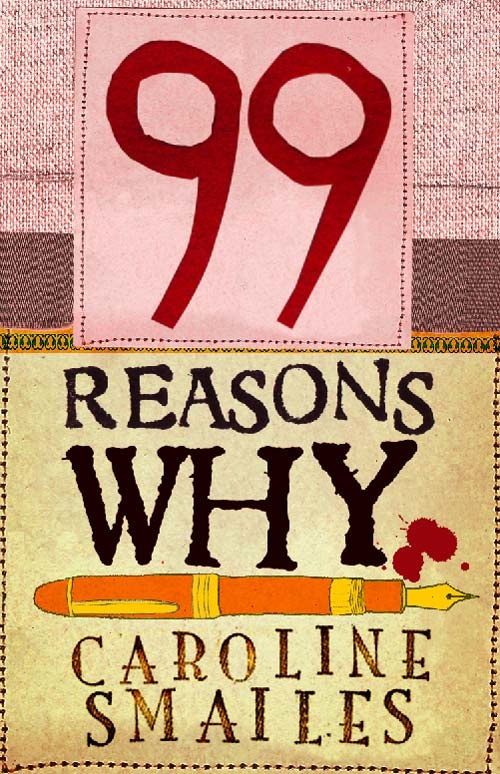
March is the month for hosting it seems! There will be a Q&A with Vanessa Gebbie next Friday, and this week I’d like to introduce you to 99 Reasons Why by Caroline Smailes.

Kate isn’t like 22 year olds. She’s got a job to do for her Uncle Phil. Each day, she spies on The Kevin Keegan Day Nursery across the road from her bedroom window, writing down all of the comings and goings in her notebooks. That’s how she spots her little girl in the pink coat. She likes her, and it isn’t long before Kate asks her mum to steal the girl for her. Plans are made. But then, quite unexpectedly, Kate flashes her breasts out her bedroom window at the little girl’s father. And that’s the reason why nothing will ever be the same again…

99 Reasons Why is a book with a difference, and it’s catching a lot of attention. It is only being published as an ebook and comes with 9 different endings which readers can navigate using multiple choice questions on your Kindle or via a spinning story wheel on your iPad or iPhone – ideal for those of you who started using the new iPad since the 16th! There are also two additional endings. One is the ending that will be handwritten by Caroline and auctioned for charity, and the other is here for your reading pleasure today!

If you haven’t already read 99 Reasons Why you can find it either for your Kindle on Amazon, or your iPad / iPhone on iTunes. And if you haven’t yet, but you have an urge to start at one of the possible endings…read on!

99: the reason why I was only worth ninety-nine quid

It’s been six days since the little girl in the pink coat went missing and me Uncle Phil’s in me bedroom.

We’ve been watching the little girl in the pink coat’s mam on the news. She was appealing to the public for witnesses.

‘Didn’t realise she had a mam,’ I says, looking at me telly.

‘Everyone’s got a mam, pet,’ me Uncle Phil says to me.

‘She sold her story to The Sun,’ I says, looking at me telly.

‘Got a few quid,’ me Uncle Phil says to me.

I nod.

‘She wanted nowt to do with that bairn before all this,’ me Uncle Phil says, looking at me telly.

‘Do you know where she is?’ I asks me Uncle Phil.

‘Belle?’ me Uncle Phil asks me.

I nod.

‘She’s safe,’ me Uncle Phil says to me. ‘Your mam’s keeping an eye on her.’

‘Can I be her mam?’ I asks me Uncle Phil.

‘No, pet, you’re a filthy whore,’ me Uncle Phil says to me.

I nod.

‘Can you make Andy Douglas come back, Uncle Phil?’ I asks me Uncle Phil.

Me Uncle Phil shakes his head.

‘I love him,’ I tell me Uncle Phil.

‘Andy Douglas is your brother, pet. You didn’t seriously think Princess Di was your mam, did you?’ me Uncle Phil asks me.

I nod.

‘You’re a cradle snatcher just like your mam,’ me Uncle Phil says to me.

I nod.

‘Your mam miscarried when she found out I’d been banging Betty Douglas. Betty was expecting you,’ me Uncle Phil says to me.

I don’t speak.

‘When you was born, your mam went mad and I ended up buying you from Betty Douglas for ninety-nine quid,’ me Uncle Phil says.

‘Ninety-nine quid?’ I asks me Uncle Phil.

‘I paid a hundred but got a quid change for some chips for your mam and dad’s tea,’ me Uncle Phil says to me.

‘You bought me?’ I asks me Uncle Phil.

I’m a little bit sick in me mouth.

‘It was the right thing to do,’ me Uncle Phil says to me. ‘I got Betty Douglas pregnant straight away with Andy.’

‘I’m pregnant,’ I says to me Uncle Phil. ‘I’m pregnant with me brother’s baby,’ I says, and then I throws up on me purple carpet.

‘You’re a filthy whore,’ me Uncle Phil says to me.

‘What am I going to do?’ I asks me Uncle Phil.

‘You’re going to have the baby,’ me Uncle Phil says to me.

‘Have me brother’s baby?’ I asks me Uncle Phil.

‘Then I’m giving it to Betty Douglas to bring up,’ me Uncle Phil says to me.

‘You what?’ I says to me Uncle Phil.

‘It’s the right thing to do,’ me Uncle Phil says to me.

‘I can’t—’ I says to me Uncle Phil.

‘It’s either that or I’ll make you disappear,’ me Uncle Phil says to me.

I don’t speak.

I’m thinking, they’re all a bunch of nutters.

A Literary Inquisition

As a writer and editor, I’m sure I’m not alone in wanting to reach out to fellow writers to further educate myself in the craft of writing and publishing; the want and need for learning and further understanding is infectious. We attend seminars, workshops, read books/blogs/general websites.

As a reader, this education continues whether we wish to learn more by exploring unknown genres or subjects, or the simple act of escapism and exploration into new worlds. We often choose what we read dependent on our peer opinion – be that your best friend raving about a book over coffee or a rating on an Amazon suggestion.

With the internet at our fingertips, there is more and more of a chance to reach out to the authors that inspire or interest us. Which is where I come in with this opportunity for someone to awarded with the prize of a beautiful new paperback in return for your literary inquisition.

Vanessa Gebbie‘s debut novel, The Coward’s Tale is being launched in paperback on the 29th March, and she will be taking this tale on a blog tour which will stop here on the 30th March.

The Coward’s Tale is a powerfully imagined, poetic and haunting novel, spiked with humour. It is a story of kinship and kindness, guilt and atonement, and the ways in which we carve the present out of an unforgiving past

Bloomsbury

I’m inviting you, whether you’re a reader, writer or both, to send me your questions which will be answered by Vanessa on the Q&A blog on the 30th March. The most searching question will be picked out by Vanessa and awarded a paperback copy of The Coward’s Tale*, so please get thinking and ask your most burning questions!

  • Send your questions via email to lexi@servicestoliterature.co.uk
  • Leave your question here using the comments section below
  • Feel free to comment/reply to me where the link is shared on FB or Twitter

Vanessa Gebbie is the author of two collections of stories and contributing editor of a creating writing text book. She has won numerous awards – including prizes at Bridport, Fish and the Willesden Herald (the latter judged by Zadie Smith) – for her short fiction. An extract from The Coward’s Tale won the Daily Telegraph ‘Novel in a Year’ Competition.

*Winner will be announced on 30th March 2012

Beautiful little paper miracles*

With the extra day in February and an attempt to ensure I blog at least once a month, I’m taking the opportunity to add to the discussion on the future of publishing and of the book. This is a really exciting time of exploration, experimentation  and connection, with thousands of voices interacting with this subject. With so many opinions out there and an insane research interest in this quickly evolving subject, I’ve found that I have my feet on either side of the digital vs traditional argument and I’m sure I’m not the only one.

Although there are lots of articles out in the internet ether, the stance often plays devil’s advocate by introducing the proposition that the life of the traditionally printed book is at an end. Of course, a lot of media sources are going to speak in absolutes to provoke debate, however some do focus on the positives on the evolution of the e-book. I found the article “Are books and the internet about to merge?” by Damien Walter to be very interesting in the way he brings new light to the argument by focusing on the technological links between books and the internet as the electronic format is growing and the new way of defining books. “E-Books Can’t Burn” by Tim Parks also had an intriguing position, by exploring the nuances of the book experience.
However, it was the comments on both of these articles that interested me the most. With an engaged audience comes intelligent and at times protective response which opens the debate to much wider subjects such as copyright, generational gaps, the position of publishers and agents, the importance of storytelling, and books as objects.

For me, with my feet planted either side of the debate, what I’m most excited about is what is going beyond traditional AND e-books. The experiments into multimedia storytelling like the next digital project from Kate Pullinger, “Dual”, show us how literature is beginning to move beyond the constraints of traditional novels. On the other side, handmade original printed editions direct from authors and “desirable and collectable” editions from literary publishers are popping into the publishing news and circles, and both enthral me. For example, the new imprint at Bloomsbury, Bloomsbury Circus, will be shamelessly literary in unusually sized printed form, whilst Picador celebrates their 40th anniversary this year with beautiful black and white editions of classics new and old with additional resources and material for readers to explore the texts further.

I realise that the debate on traditional vs digital will rage on for some time, and whilst it does I’d love to hear what you think is the future of publishing and how are you engaging with the future possibilities for either and or both formats. Please leave a reply below!

*with thanks to Chris, a.k.a “nattybumpo” commenting on “Are books and the internet about to merge?“, for the inspiration. And to 47giraffes for post photograph!

It is always the quiet ones

When someone (or rather a blog) goes quiet on you, it could mean that the author has

  1. fallen off the face of the earth (highly unlikely)
  2. forgotten that they have a website (again, unlikely, but then again, possible)
  3. been concocting mad plans elsewhere (when it comes to literary folk, it’s almost always this)

So, I’m finally back with exciting news about new projects that are forming for 2012!

I’ve been working with Adam and the team at Dog Horn for a little while now, focusing on the more literary works that come our way. Together, we’ve been spending the winter putting together proposals and applications and, well, generally being under the weight of paperwork. However, the best made plans are starting to bear fruit, of the bruised variety!

Fruit Bruise Press will be launched this year (in a more official manner shortly) as an imprint housed by Dog Horn Publishing. Fruit Bruise is a writer development and literature promotion programme dedicated to championing the transgressive, the excluded and the emergent. The focus for 2012 is to run workshops across the country to begin working with new, exciting and hidden voices that are out there hoping to be discovered, with the project culminating in the publication and launch of an anthology.

We’re kicking off the project, with a fantastic slot booked at Alt.Fiction on Saturday 14th April. The workshop “Jumping boundaries and breaking rules: Literary beginnings” will be running from 4-5pm as a taster for what is to come! Based in Leceister over two days for this year, Alt.Fiction is now in it’s sixth year of brilliant events for readers and writers of science fiction, fantasy and horror. Although Fruit Bruise does not focus on genre specific fiction, we welcome one and all to our workshop to help you find new ways into your writing whatever your background! The workshop is included in the cost of the weekend ticket, which if you purchase before the 1st February, it is available for a brilliant early bird offer of £30! There are so many inspiring guests, workshops, panels, and readings on at Alt.Fiction this year, so please check out what else you could be involved with!

There is so much still going on behind the scenes currently, so this is a sneak peek. If you’d like to know more about the Alt.Fiction workshop, or about the projects coming up for Fruit Bruise, please feel free to comment below or contact me at lexi@doghornpublishing.com. There are testimonials available here too if you wish to find out more about the courses and workshops I have previously run.

Dedicated presents

I love receiving books with dedications within them. I recently came across a notebook which had been given to me. I may not have remembered where it had come from as I seem to have a never ending supply of notebooks; some people would think that this is a “problem” but I know I’m not alone. However, this one had a dedication within it with a reminder to keep writing because the gift giver loved my stories. It gave me a renewed sense of belief in my writing; I can’t explain why, the same friend has always expressed interest in my work, however this dated back to a time where I was just in the first throws of my writing development. Perhaps this is why it brings a smile to my face every time I write in it now.

Which brings me to the other kind of book with dedications which I love; secondhand books with dedications to other people within them. Wayne Gooderham has just begun a series of articles for the Guardian, along the lines of his blog, which explore “the secret histories of secondhand books.” This has prompted me to take a look at the secondhand books I have brought over the years, sometimes often chosen by the inscriptions or dedications written inside them. I loved the chance of stumbling across a moment in someone else’s lives and allowing my imagination to run wild over what could have been before the inscription and the journey the book had taken to arrive in my hands. I haven’t owned many that are as descriptive as the ones that Gooderham features, however the subtlety of a name is sometimes enough for a character: The Penguin Book of Women Poets owned by Janet Fraser in 1984; the first collection of Minerva Short Stories, owned by Caroline Goddard at some point in it’s life; the collection of letter from Violet Trefusis to Vita Sackville-West that has poignantly placed post-it notes from another owner and now it has a Lindt rabbit wrapper and a day calendar page in other poignant places from it’s current owner; the Diary of Virginia Woolf with a Ollon to Aigle train ticket from Switzerland from 20th February 1992; the copy of The Hunting of the Snark owned by M. Joan Whitfield in September 1976.

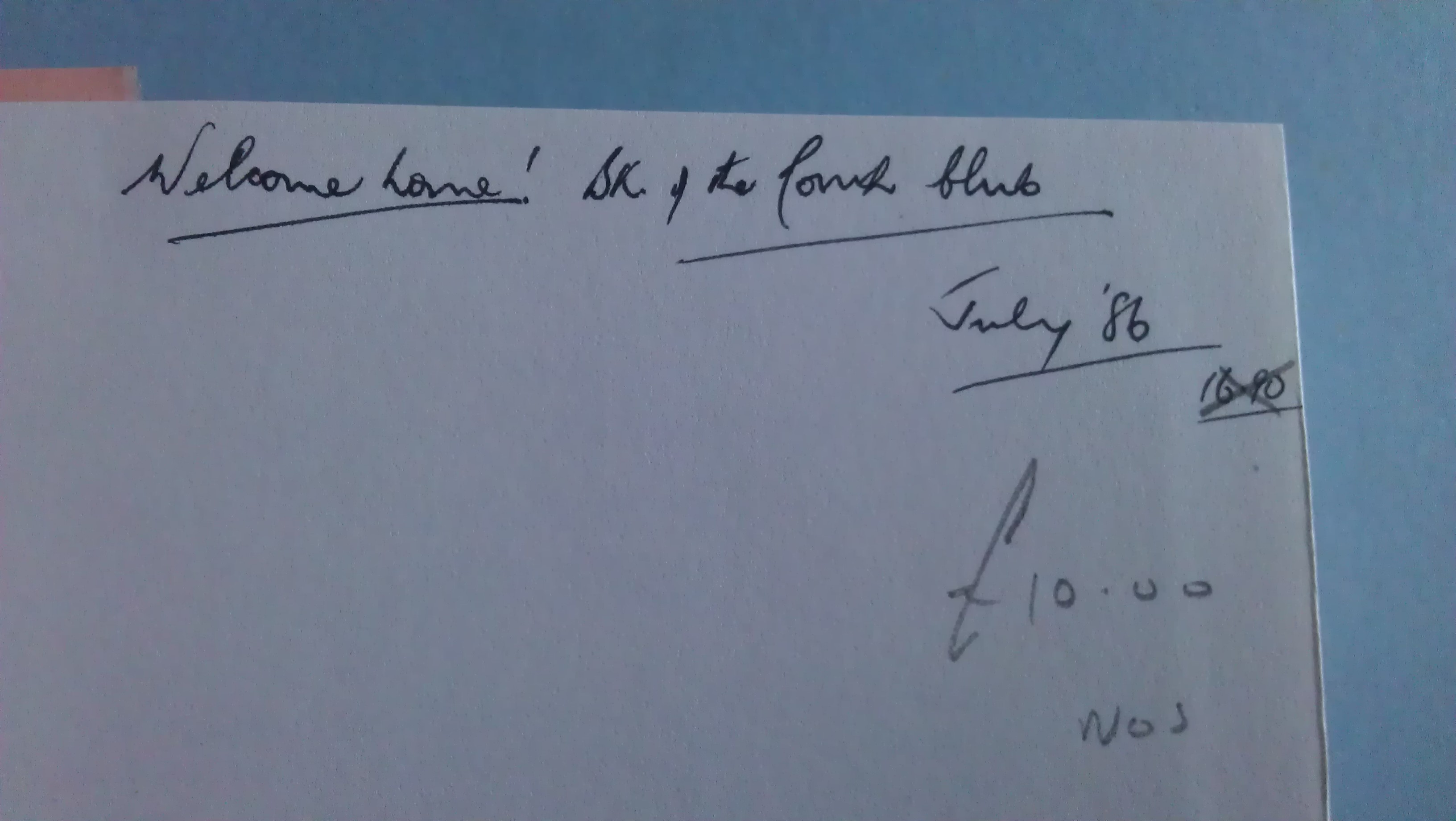
I found a short but intriguing dedication within The Oxford Library of English Poetry – Volume 2 & 3 were simply marked by July 1986, however Volume 1 states:

Welcome home! BK of the Power Club. July ’86

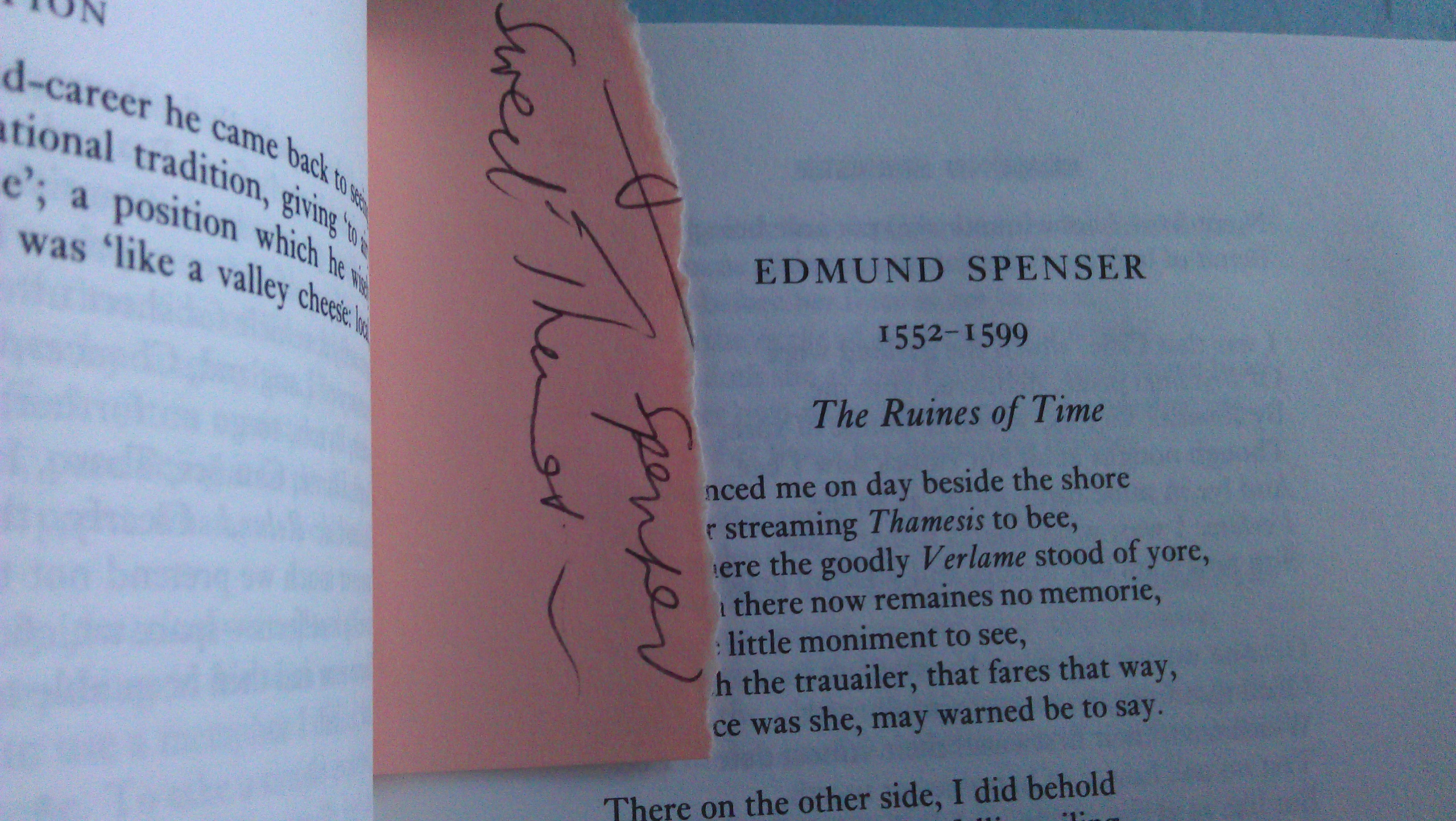
And inside there is a bookmarked poem, Edmund Spenser – The Ruines of Time

Think on that as you will!

As writers, we are always on the look out for inspiration and take it from everyday life and imagined lives, and the book dedication provides both for hungry imaginations. Visit Gooderham’s blog to find even more inspiration, and feel free to share your favourite dedications in the comments: received, given or found!

Facing Constructive Criticism: How do you approach this open door?

Lesson one in any workshop/feedback environment, specifically for me it was first introduced at University, is don’t say the following:
“I like it.” (note full stop)
“It’s nice.” (again with the full stop)
“I wasn’t sure, but I don’t know why.”
We were also advised to avoid aggression. For example, “I hated it” is not a way to start. Criticism and feedback must be constructive although that doesn’t have to be nasty.

As an editor for Dog Horn, there is many a time where I have the realisation of “it’s not working for me” or possibly even a simple “no, not for us” is underlying whilst reviewing a manuscript, however I feel that you should take as much time as you can spare to say why, or suggest other possible routes. This gives the opportunity to not only provide the writer with a new thought process, but also gives yourself the knowledge that the gut felt and often visceral “no” is an action formed on well-rounded thought.

As a writer, I have had the recent experience of opening myself and “my baby” (i.e. the novel) to a situation where a person, who was meant to be enabling my process exploration, was frustrated by my works ideas, characters etc that I was attempting to explain. Instead of providing feedback that was measured or balanced, it was simply started that my ideas would not work, and the group moved onwards. During the conversation I had the mind to understand that they were coming from a different background, and perhaps didn’t understand the complexities I was trying to open, not being a formula-led writer. I also knew that I had to get to know my novel a little better as it was still in a very raw draft stage. This on the spot criticism is also something which many authors endure from peers, critics, publishers etc. I had not realised how thick-skinned I am, which was a comfort, but also that I was able to rationalise the position of both the critique and the work. This isn’t something I’ve generally done before, and I know plenty of writers who don’t either.

Later, I was sought out by fellow writers in the group, who wanted to ensure I was okay. It was endearing and supportive and I found myself almost blasé about the situation, however it was worth knowing that I wasn’t the only one that felt the critique misplaced or abrupt. Following the earlier interaction, I had the opportunity to receive feedback from another writer who in theory was just as honest as the first but gave thought out, structured criticism that enabled me to move forward into a new direction. As far as I can see, honesty of this type is invaluable and it’s something I feel should always be given.

In a recent survey in Mslexia*, although “a sizeable majority (66 per cent) were hungry for feedback, 50 per cent also felt ‘exposed’ when showing their work, because their writing ‘feels like part of myself.'”

However, because of this perhaps,”most women take great pains to be tactful: 61 per cent said they’d try to balance negative with positive comments when giving feedback on a poor piece of writing; one in eight confessed to stretching the truth in an attempt to say something nice – and one in four overlook the problems altogether and focus only on the positive aspects of the work.”

Mslexia asks if this is a good or bad thing, I’d be inclined to say that honesty is the best policy with practise. I’ve always positioned myself as a “blunt” editor, but that straightforward attitude should be seen as a skill rather than brick to hit the piece of work or indeed the writer with! I’d love to know what you think to how criticism should be provided; brick through the window, ring the bell and run away, or perhaps knock on the door for a chat?

*With thanks to Mslexia; survey info taken from Issue 52, page 21.